Both on a conscious and subconscious level, I’ve built up some kind of resistance towards calling myself an artist. My priority in life was never to create art. I spend a lot of time in art school surrounded by people who were much more dedicated to their craft, and had visions and strong messages they wanted to convey through art. Instead I saw myself as someone just having fun with it.
Initially when considering degree choices, I thought mass communications would be a good choice. Because I felt that I didn’t have anything to say myself, but I wanted to help enable people to say it. Psychology was a tangent from that thought – I could use it to understand people, and understand how to communicate with them.
This all lied upon a core assumption I had about art: it exists for one to say something meaningful. In my head, the true purpose of art for the individual and for society was really about the message it put across. It was a form of communication. That could be for self-expression, something really indulgent and gratuitous – “accept me!”. Or it could be for political commentary, entertainment, teaching us about life. For revelling together, artist and audience, in depictions of the human experience.
But what about an urge to create just because you must, for yourself, because it’s your mode of being?
I hadn’t considered that properly. I’ve only just stopped to consider it now. I was pretty blind to this reason for making art, because being in Singapore I’m always influenced by the little pragmatic voice.
Over the past few years after leaving art school I started using the words ‘creative’ and ‘design’ far more than ‘art’. I became interested in doing psychology and cognitive science research on creativity (I still am!), not art. I started calling myself a graphic designer, then a UX designer, but never an artist. I framed my goals for the future as wanting to make Singapore more creative, not more artistic.
Again, I wanted to draw focus away from art, in terms of its forms like painting or music or dance, because I thought that art wasn’t the ends. Creativity was the ends. Art was a means to an end. The process of art-creating can open your mind, allow you to see better, allow you to play and be creative. And creativity, the real superpower, can then flood into all areas of your life, freeing you to express yourself in any medium and make better decisions.
I mean, that can still be true. But I overlooked the idea that art is an ends in itself.
I think I shifted focus from art to creativity to get rid of this idea that only artists could be creative. Because not everyone can be, or even wants to be, artists full-time. Art obviously has a reputation for being a high-income luxury, far away from ‘the real world’, which I was so tired of hearing. I know that SOTA was a bubble. I know that artists don’t save as many lives as engineers or doctors. I know that current society doesn’t vibe with letting artists do their own thing, so we deem artists unproductive.
Creativity is still important, but why not let art be enough?
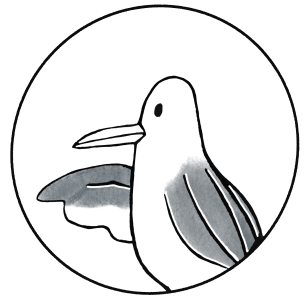
Anyone should get the chance to have fun with art, for no reason other than because it is a fun thing to do. That was me in SOTA – I was doing it because it was fun, not because I had to communicate something to society! I can’t remember where I got this line from, but someone was saying that birds sing because they’re happy and that’s it. Have you seen videos of birds bouncing to the beat of music, like this absolute legend? How inspiring is that?
Dance and music and story-telling and visual art are such natural parts of so many human cultures because it’s just something we do when we’re happy. This is stuff that you can get for free.
I want to be an artist again.
 joy wang
Leave a comment