
When I was studying film as a teenager, between 2015 to 2016, I was always slightly annoyed by the prevalence of nostalgia in local films. The local films deemed worth talking about by my film teachers were either from the past – Mee Pok Man (1995), 12 Storeys (1997), 15 (2003) – or set in the past – Ilo Ilo (2013)1, As You Were (2014)2, even Shirkers (2018) later on3. Likewise, the most critically acclaimed of my seniors’ short films were always the ones tied up with the aesthetic haze of Nostalgia, with warm, diffuse filters and a slow, slow tempo.
I was frustrated – why couldn’t we have punchy, comedic, mainstream films set in present-day Singapore (that weren’t made by Jack Neo4)?
To be fair, I was not entirely immune. I did indulge in the nostalgia trips. I, too, longed for something more poetic to make art about than construction sites, MRTs and shopping malls. As with most amateur photographers, I was also a big fan of Nguan, and the rosy hue he applied on his pictures of Singapore.
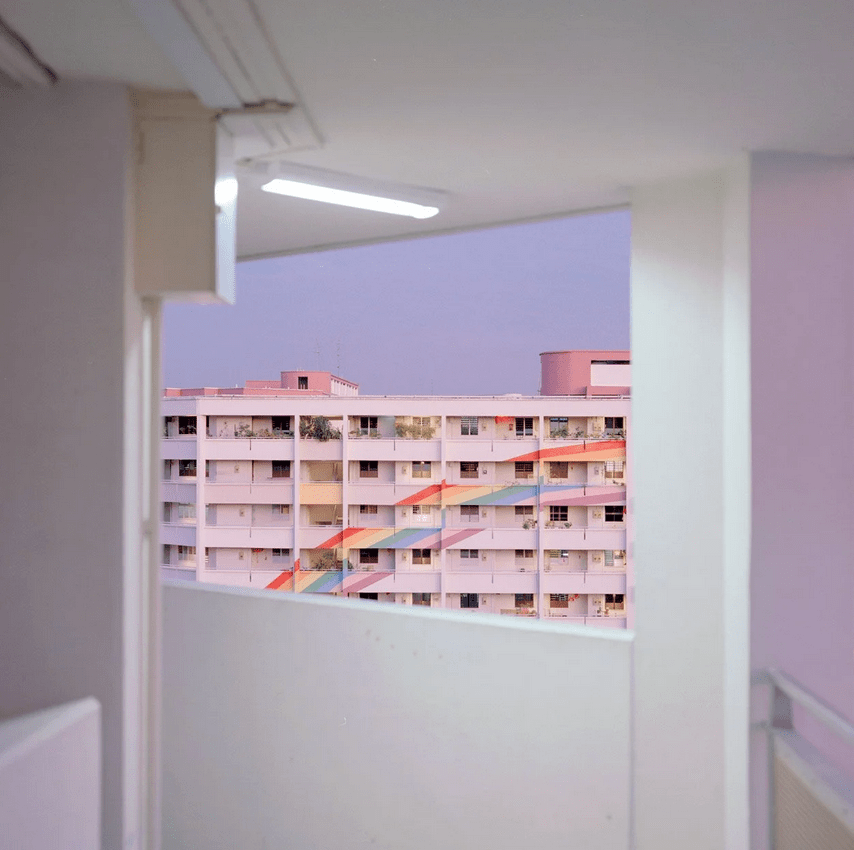
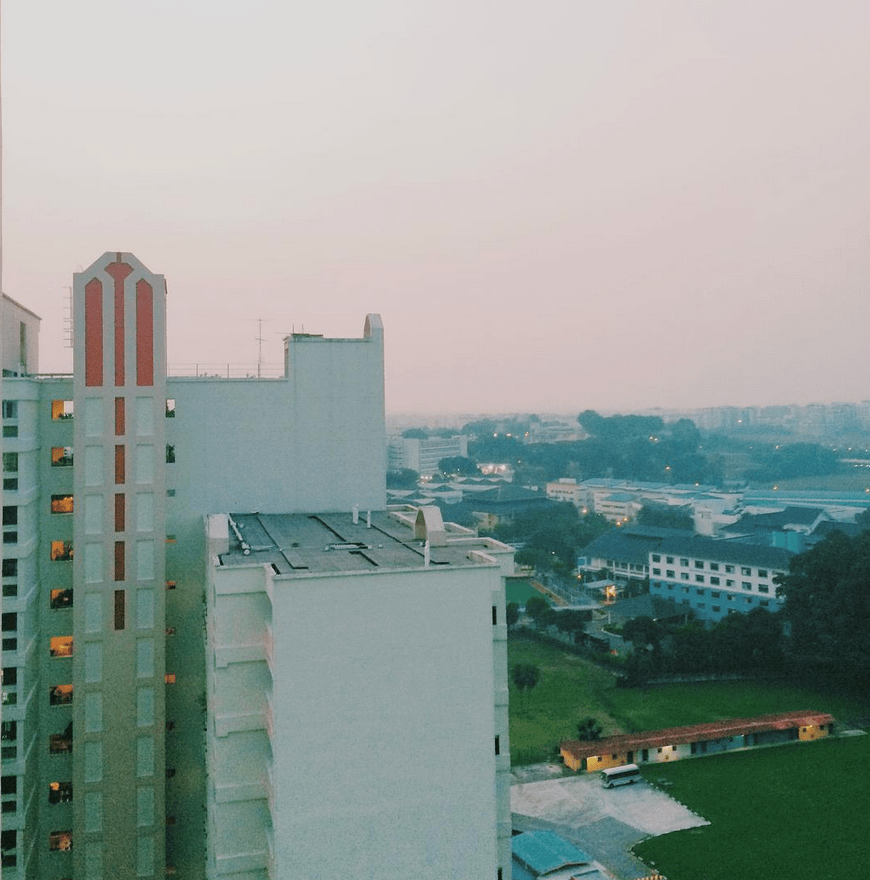
2015 brought the worst bout of haze the region had ever seen.
This craze of nostalgia went beyond Singaporean film; literature was another prime suspect. In 2015-2016 my memory recalls that the poetry section was completely saturated with stories of the past, and the short story shelf wasn’t doing much better.
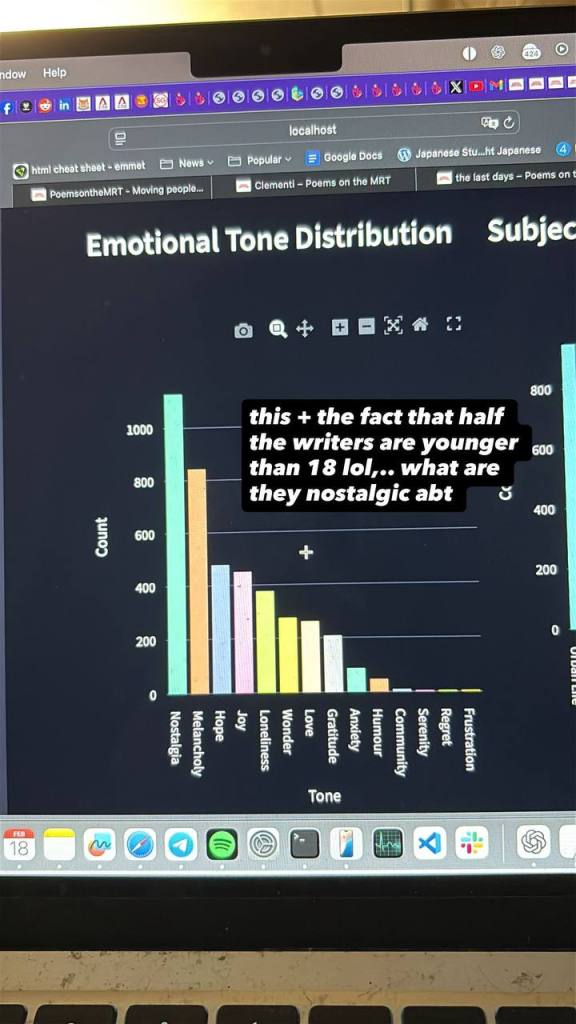
And more recently, I was reminded of nostalgic poetry because of my friend Gena’s recent findings around on the open submissions to Poems on the MRT. This is an (admittedly, pretty lovely) initiative by the National Arts Council this year to – you guessed it – display poems on the MRTs. Alongside the selection of poems by acclaimed local poets, the National Arts Council also opened up submissions last November to the beginning of February, for regular folk to share poems they had written. The poems can be viewed on this interactive site.
Gena crunched all the poetry submissions – all 1,462 of them – and observed that there were more poems tagged with the theme ‘nostalgia’ than any other theme, with ‘melancholy’ trailing closely after.
To the person who knows anything about Singapore, the nostalgia is not too difficult to place. Singapore is a country that moves fast, demolishes buildings and likes turning things into cost-benefit analyses. Our urban landscape changes every day. A road you used to walk along might be gone tomorrow. The place you used to hang out with your friends every day after school might get turned into a black-and-grey condominium. It’s quite a natural, understandable thing that someone growing up amidst these changes would be missing and yearning for the spaces and patterns of the familiar past.
My recent realisation goes a similar way, but was prompted when I started reading more about death and funerals.
I think the nostalgic art is a ritualised form of grieving.
Humans do not naturally know how to deal with big emotions like grief, especially when confronted by them as a lone individual. Grief can be crushing, and leave us debilitated. We often learn how to cope with grief by being in community, and mimicking the rituals and behaviours that we see others use to cope. Some cultures embed coping rituals for death and grief into their cadences of life. In Mexico, they decorate graves with marigolds, make sugar skulls, and turn grief into celebration on the Day of the Dead. Nepal has a similar death festival every year, Gai Jatra, to drown out grief with song and drums and dance.
In Singapore, grief is not something that you see, let alone celebrate. In fact, there are few ways of learning how to express emotion at all, because of the lack of it around us. The archetypal Asian parents give us stoic Asian silences and apologies made of cut fruit. The archetypal star students in school are straight-faced grinders who put their head down and work hard, and wince at the points taken away from perfection, not those who cheer and dance when they score top marks. The child who squeals in delight in a mall is stared at in admonishment.
Being the deeply socially-tuned creatures that humans are, if we don’t see certain types of emotion being expressed around us, that might lead us to believe that the emotion simply doesn’t exist. Here, then, we might end up tricking ourselves. Somewhere inside, the seed of grief is covered up by the rhythms of movement around us – the commutes to work, the work itself, the eating, the bathing, the sleeping, the obligatory gym. You move on, because everyone else is moving on, and there are bigger, more pragmatic things to be worried about. The seed of grief remains, but just about forgotten.
So here’s my theory. One fine day, a Singaporean artist discovered a hack. They realised that they could express the grief they carried in a palatable, nuanced, subtle, even high-art way – through a NOSTALGIC FILM/POEM/ARTWORK. And much like other coping rituals, the Singaporean artist community saw this and started mimicking this very behaviour by making MORE NOSTALGIC FILMS/POEMS/ARTWORKS, especially as it brought light to the grief they themselves carried.
The ripple effect of nostalgic art to follow were simply the replications of a grieving ritual adopted by the community, interpreted through the (sometimes pretentious) lens of each artist. Together, they dwelled in the comfort of their vaguely obliquely agreeable expressions of grief that were at least passably productive and refined and fundable – nostalgia art.
Will the nostalgia end? I am optimistic. Although changes in the Singaporean landscape never seem to cease, and there remains much to grieve, younger generations might have new ways of dealing with it.
One of that is with absurdist humour. Last year, I saw We Can Save The World!!!, a sci-fi slapstick comedy by young Singaporean director Cheng Chai Hong, when it was in cinemas. I enjoyed it whole-heartedly and it got the theatre in stitches. (It got mediocre ratings from local film reviewers (1, 2) – something I will leave the reader to think about.)
And as with coping rituals, I’m hoping this one will get mimicked too.
[1] I like Ilo Ilo. It’s a good movie. I have praised it very briefly in this post.
[2] As You Were was directed by my film teacher Liao Jiekai. I can’t say I fully enjoyed it, but I will say that some of the shots were stunning.
[3] I did enjoy Shirkers. I’m quite proud of it as a Singaporean film, and admittedly, it goes between nostalgic-past and present-day mystery.
[4] Jack Neo is probably Singapore’s most famous local filmmaker. He made some pretty emblematic and good films in his early days that weren’t actually nostalgia trips and represented Singaporeans culture well, like Money No Enough (1998) and I Not Stupid (2002). Then he rode his cash cow Ah Boys To Men to the skies.
 joy wang
Leave a comment